Last updated on: 5 months ago
Key Takeaways
- Solopreneur Challenges are Surmountable: Limited time and budget are the biggest hurdles in SEO for solopreneurs, but they can be overcome with a strategic approach and the right set of tools, turning SEO into a cost-effective growth engine.
- Fundamentals First, Tools Second: A solid understanding of the four pillars of SEO—Keyword Research, On-Page, Technical, and Off-Page is essential. Tools are powerful, but they are most effective when guided by a clear strategy.
- Master Free Tools for a Strong Foundation: Every solopreneur should master Google’s free suite of tools. Google Search Console is your technical health monitor, Google Analytics tracks user behavior, and Google Keyword Planner is your starting point for audience insights.
- Go Beyond Keywords to User Intent: Effective keyword research involves more than just search volume. Tools like AnswerThePublic and AlsoAsked are crucial for uncovering the specific questions and problems your audience has, allowing you to create truly valuable content.
- Optimize for Both Humans and Search Engines: Your content must be engaging and readable for your audience while also being technically optimized for search engines. Use a combination of AI-powered tools (like Surfer SEO) and readability checkers (like Hemingway) to achieve this balance.
- Build Authority Through Earned Backlinks: Backlinks act as votes of confidence. Focus on sustainable strategies like creating link-worthy content, strategic guest posting, and leveraging platforms like HARO to build a strong, authoritative backlink profile.
- Measure Everything for Data-Driven Decisions: You can’t improve what you don’t measure. Regularly tracking your organic traffic, keyword rankings, and site health allows you to identify what’s working and pivot your strategy for maximum impact.
- Create an Efficient Workflow: The key to consistency is an integrated and streamlined process. Choose tools that work well together and automate repetitive tasks to save time and ensure your SEO efforts are continuous, not sporadic.
Understanding the Solopreneur’s SEO Challenge

You’ve got a fantastic business idea, a burning passion, and the drive to make it happen all on your own. But let’s be real, wearing all those hats—CEO, marketing guru, customer service rep, and everything in between—can be a total juggling act.
When it comes to something as crucial as SEO for solopreneurs, it often feels like another Herculean task on an already overflowing plate. You know you need to rank higher and drive traffic to your website, but how do you even begin when you’re a one-person show?
The Time Crunch is Real
One of the biggest hurdles for any solo entrepreneur trying to master SEO is simply the lack of time. Unlike larger companies with dedicated marketing teams, you’re the one handling every single aspect of your business.
This means that important tasks like keyword research, creating high-quality content, and optimizing your website can easily get pushed to the back burner. It’s not that you don’t want to do it; it’s that there are only so many hours in a day! Juggling customer demands with strategic growth planning can feel impossible.
When SEO lives in a ‘to-do’ list that never makes it to the top, small changes and fixes slip through the cracks. Treat SEO as an ongoing task: set aside 15–30 minutes each week to check rankings, update keywords and review performance.
This time constraint also means that staying updated with the ever-evolving SEO algorithms can be a challenge. Google’s always changing things up, and keeping pace requires consistent learning and adaptation.
But don’t despair! Even with limited time, smart solopreneur SEO tips and productivity hacks like time blocking and batch working can make a huge difference, allowing you to focus on organic traffic generation without burning out.
Limited Resources, Big Dreams
Another significant challenge for many solo entrepreneurs is working with a limited budget. Hiring a full-time SEO specialist or agency might be out of reach, and even investing in premium SEO tools for solopreneurs can feel like a big decision.
This can make it seem like competing with larger businesses, who have seemingly endless resources for marketing, is an uphill battle. But here’s a secret: SEO is actually one of the most cost-effective marketing strategies out there in the long run.
It might require an initial investment of your time and possibly some budget for tools, but the organic traffic it drives is essentially free. Focusing on local SEO for solopreneurs can be especially impactful with a lean budget, as it targets a specific geographic audience with precision.
Juggling All the Hats (and Wearing Them Well!)
As a solopreneur, you’re not just doing SEO; you’re also managing your finances, creating your products or services, handling customer support, and probably making your own coffee too! This means you need to be a jack-of-all-trades, including understanding everything from keyword research tools to on-page SEO techniques and website ranking strategies.
It’s a lot to learn and implement, often without a dedicated team to bounce ideas off of. The pressure to differentiate your brand and establish authority with limited resources is intense.
However, this unique position also gives you an incredible advantage. You have a direct connection to your audience and a deep understanding of your business, which can translate into authentic and highly valuable content marketing for solo entrepreneurs. While the challenges of small business SEO are undeniable, they are absolutely surmountable with the right knowledge, the right tools, and a consistent, strategic approach.
Essential SEO Fundamentals for Solo Businesses
Hey there, fellow solopreneur! Juggling all the hats in your business can feel like a circus, right? But here’s the deal: if you want to rank higher and drive traffic to your solo venture, understanding some core SEO fundamentals isn’t just a nice-to-have, it’s absolutely crucial.
Think of SEO for solopreneurs as your secret weapon to get found online without constantly shelling out for ads. It’s about making your website visible to potential customers, organically and consistently.
Understanding Your Audience and Keywords
First things first, let’s talk about your audience. Before you even think about “SEO tools for solopreneurs,” you need to know who you’re trying to reach. Who is your ideal customer? What problems do they have that you can solve? Once you are ridiculously clear on this, you can start digging into keyword research.
Keyword research is essentially figuring out the exact words and phrases people type into search engines when looking for what you offer. It’s the bedrock of any successful content strategy for solo entrepreneurs.
You’ll be looking for primary keywords (your main topic), secondary keywords (related topics), and LSI (Latent Semantic Indexing) keywords, which are semantically related terms. For example, if your primary keyword is “homemade dog treats,” LSI keywords might include “healthy dog snacks,” “natural pet food recipes,” or “organic dog biscuits.”
Don’t just chase after high-volume, competitive short-tail keywords like “marketing.” Instead, focus on specific, achievable long-tail keywords like “solo entrepreneur marketing strategies for handmade jewelry.” These might have lower search volume but often come with higher conversion potential because they indicate clearer intent.

On-Page SEO: Making Your Content Search-Engine Friendly
Once you know what keywords your audience is searching for, it’s time to optimize your content directly on your website. This is what we call on-page SEO techniques, and it’s about signaling to search engines what your pages are all about.
- Title Tags and Meta Descriptions: These are the first things people see in search results. Make them compelling, include your primary keyword, and keep them concise (around 60 characters for titles and 160 for meta descriptions).
- Headings (H1, H2, H3): Use headings to break up your content and make it readable. Your H1 should contain your primary keyword, and H2s and H3s can include secondary and LSI keywords.
- High-Quality, Helpful Content: Google prioritizes content that is relevant, informative, and engaging. Focus on providing real value to your audience. Avoid keyword stuffing – it can actually hurt your rankings!
- Image Alt Text: Describe your images using relevant keywords. This helps search engines understand your visuals and improves accessibility.
- Internal Linking: Link to other relevant pages on your own website. This helps search engines understand your site’s structure and keeps visitors engaged longer.
- URLs: Keep your URLs short, descriptive, and keyword-rich.
Technical SEO for Solo Entrepreneurs
Think of technical SEO as the behind-the-scenes magic that makes your website fast, secure, and easy for search engines to understand. You don’t need to be a developer to grasp the essentials for your small business SEO.
- Site Speed: Slow websites frustrate visitors and can hurt your rankings. Optimize images, use a reliable hosting provider, and minimize unnecessary plugins. Aim for under three seconds load time.
- Mobile-Friendliness: Most people browse on their phones, so your site absolutely needs to look and work great on mobile devices. Google uses mobile-first indexing, meaning it primarily looks at the mobile version of your site for ranking.
- SSL Security (HTTPS): Ensure your website uses HTTPS. It secures user data, which is a ranking factor and builds trust.
- XML Sitemaps and Robots.txt: These files help search engines crawl and index your site efficiently, telling them which pages to prioritize and which to ignore.
- Fix Broken Links: Regularly check for and fix any broken links on your site to maintain SEO value and a good user experience.
Building Authority with Off-Page SEO and Content Marketing
While on-page and technical SEO focus on what you can control on your site, off-page SEO is about external signals that tell search engines your site is trustworthy and authoritative. For solo entrepreneurs, this often ties directly into your content marketing for solo entrepreneurs efforts.
The biggest component here is backlinks – links from other reputable websites pointing to yours. These act like votes of confidence. You can earn backlinks through creating high-quality, valuable content that others naturally want to link to, guest posting on relevant sites, or listing your business in online directories.
Consistent, high-quality content not only helps with organic traffic generation but also establishes you as an expert, leading to more authority and potential backlinks.
Local SEO for Solopreneurs
Don’t forget local SEO for solopreneurs if you serve a specific geographic area! Optimizing your Google Business Profile, collecting positive reviews, and creating locally focused content can significantly boost your visibility for “near me” searches, a term whose implicit use has grown 150% in recent years.
By mastering these essential SEO fundamentals, you’re laying a solid foundation for your solo business to thrive online, bringing in consistent, free organic traffic and helping you achieve your goals.
Top Keyword Research Tools for Solopreneurs on a Budget

Let’s get real about one of the most powerful ways to get your business found online: keyword research. It might sound a bit technical, but trust me, understanding what your potential customers are actually typing into search engines is the secret sauce for any successful SEO strategy.
For us solo entrepreneurs, with limited time and often tighter budgets, finding the right keyword research tools can feel like a quest. But don’t fret! You don’t need a massive budget to unlock incredible insights. There are some fantastic, often free or super affordable, SEO tools for solopreneurs that can help you master the art of organic traffic generation and drive traffic right to your digital doorstep.
Let’s dive into some of the best keyword research tools for solopreneurs on a budget, designed to give your small business SEO a serious boost.
Google Keyword Planner: Your Free Goldmine
First up, we have Google Keyword Planner. This tool is a true powerhouse, and the best part? It’s completely free! While it’s primarily designed for those running Google Ads, you absolutely don’t need to spend a dime on ads to use its core keyword research features. All you need is a Google account.
Google Keyword Planner allows you to:
- Discover new keywords: Input a few words or phrases related to your business, and it’ll churn out a ton of related keyword ideas.
- See monthly search volume: Get estimates on how many times specific keywords are searched each month. This helps you understand a keyword’s popularity.
- Gauge competition: It provides a competition level, which, for SEO purposes, can give you a rough idea of how difficult it might be to rank for that term organically.
This tool is invaluable for identifying relevant keywords and laying the groundwork for your content marketing for solo entrepreneurs. It’s straight from Google, so you know the data is pretty reliable for understanding what people are searching for.
Ubersuggest: Beginner-Friendly Insights
Next on our list for smart solopreneur SEO tips is Ubersuggest. Neil Patel’s Ubersuggest offers a solid free version that’s super helpful, especially for beginners diving into website ranking strategies. While it has daily limits, it still provides a wealth of information to help you drive traffic, even on a tight budget.
With Ubersuggest, you can:
- Get keyword ideas: It offers keyword suggestions, including valuable long-tail opportunities that are often less competitive.
- View search volume and SEO difficulty: You’ll see estimated monthly searches and a difficulty score, helping you pinpoint keywords you actually have a shot at ranking for.
- Perform competitor analysis: The tool also lets you peek at what keywords your competitors are ranking for, giving you ideas to refine your solo entrepreneur marketing efforts.
Ubersuggest’s user-friendly interface makes it a favorite among SEO tools for solopreneurs, giving you actionable insights without needing to be an SEO guru.
Google Trends: Uncover Regional and Seasonal Interest
Another powerful free tool from Google is Google Trends. It’s fantastic for visualizing the popularity of a keyword over time. This helps you:
- Identify Seasonal Trends: Discover if a keyword is more popular during certain times of the year, allowing you to create timely content.
- Analyze Local Interest: You can drill down to see a keyword’s popularity by country, state, or even city, which is perfect for refining your local SEO strategy.
- Compare Keywords: Pit multiple keywords against each other to see which one is more popular or gaining traction.
While it doesn’t provide absolute search volume, Google Trends is excellent for understanding the context and timing of your audience’s interest.
AnswerThePublic & AlsoAsked: Uncovering User Intent
If you want to truly understand what’s on your audience’s mind, then AnswerThePublic and AlsoAsked are your go-to keyword research tools. These platforms are fantastic for uncovering question-based keywords and understanding the intent behind searches, which is critical for creating content that resonates.
AnswerThePublic
AnswerThePublic is like having a conversation with your audience. It takes your seed keyword and generates a visual “cloud” of questions, prepositions, comparisons, and alphabetical listings related to your topic.
This visualization is a goldmine for:
- Content ideas: It shows you the exact questions people are asking, which is perfect for crafting blog posts, FAQs, and other content marketing pieces that directly address your audience’s needs.
- Long-tail keywords: These longer, more specific phrases often have lower competition but higher conversion potential.
The free version usually allows a limited number of searches per day, but those insights can be incredibly powerful for your content strategy.
AlsoAsked
Similar in spirit but with a slightly different focus, AlsoAsked taps into Google’s “People Also Ask” (PAA) boxes. It visually maps out how related questions connect, helping you grasp the deeper context of a search topic.
This is brilliant for:
- Structuring content: It helps you understand the logical flow of user questions, allowing you to structure your content to comprehensively answer all related queries.
- Finding “zero volume” keywords: Many long-tail questions might not show high search volume in other tools, but AlsoAsked can reveal these valuable, less competitive terms.
Both AnswerThePublic and AlsoAsked are fantastic for diving deep into the nuances of what your audience truly wants to know, enabling more effective content marketing for solo entrepreneurs.
Mastering SEO for solopreneurs really boils down to smart choices, especially when it comes to tools. By leveraging these budget-friendly keyword research tools, you can confidently identify high-impact keywords, create content that truly speaks to your audience, and significantly improve your organic traffic generation.
On-Page SEO and Content Optimization: Tools to Perfect Your Pages
Alright, you’ve got amazing ideas brewing, and you’re ready to share them with the world. But simply writing great content isn’t enough in the competitive online landscape. To truly master SEO for solopreneurs, you need to make sure your words aren’t just engaging, but also optimized to rank high and truly drive traffic solopreneur style.
Think of it this way: your content is your product, and content optimization tools are the quality control and marketing department rolled into one! These crucial SEO tools for solopreneurs will help you refine your articles, blog posts, and website copy to meet search engine expectations while still delighting your audience.
Supercharge Your Content with AI-Powered Optimization
Content optimization isn’t just about keywords anymore; it’s about topic authority and user intent. AI tools bridge that gap for solo entrepreneurs.
If you’re serious about competing for those top spots, tools that analyze your content against top-ranking competitors are a game-changer. They offer invaluable on-page SEO techniques insights and help you cover all your bases.
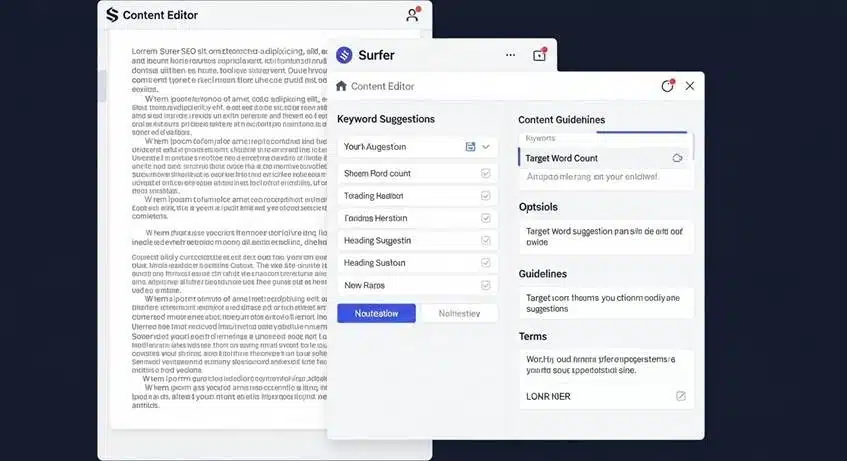
- Surfer SEO: This powerhouse tool helps you analyze top-ranking pages for your target keyword and provides actionable recommendations. It tells you exactly how many words your content should have, what keywords and phrases to include, and even what questions to answer. For small business SEO, Surfer can feel like having an entire content team at your fingertips.
- Frase.io: Similar to Surfer, Frase uses AI to help you research, write, and optimize content. It can even generate content briefs automatically, saving you tons of time on outlining. It helps you identify content gaps and ensures your article comprehensively covers your topic, which is vital for effective content marketing for solo entrepreneurs.
Furthermore, the landscape is shifting from traditional SEO to include AEO (Answer Engine Optimization) and GEO (Geographic Engine Optimization). AEO is about creating content that directly answers your audience’s questions, making it perfect for voice search and featured snippets. GEO, crucial for local solopreneurs, involves optimizing your digital presence for location-based searches on platforms like Google Maps.
This is where modern AI tools excel, helping you efficiently scale your content production to address specific user questions for AEO or create multiple location-specific pages for GEO. To discover which platforms can best automate and enhance this process, explore our in-depth review of the top AI writing tools.
Polish Your Prose with Grammar & Readability Checkers
Even the most perfectly optimized content won’t keep readers if it’s riddled with errors or hard to read. Good readability and flawless grammar are non-negotiable for professionalism and user experience.
- Grammarly: Beyond catching typos and grammatical errors, its premium version offers suggestions for clarity, engagement, and even tone. Clean, error-free content is more trustworthy, leading to better user engagement signals that search engines appreciate.
- Hemingway Editor: This tool focuses purely on readability. It highlights complex sentences, passive voice, and unnecessary adverbs, pushing you to write clear, concise copy. Easy-to-read content keeps visitors on your page longer, reducing bounce rates – a subtle but important factor in website ranking strategies.
Streamline On-Page SEO with Platform-Specific Plugins
Suppose your website runs on a popular CMS like WordPress (and many solopreneur sites do!). In that case, specific plugins are essential for managing your fundamental on-page SEO techniques without needing to be a coding wizard.
- Yoast SEO & Rank Math (for WordPress): These are the two titans of WordPress SEO plugins. Both offer incredible features, often with robust free versions perfect for SEO for solopreneurs. They help you with adding meta titles and descriptions, optimizing your content for a focus keyword, creating XML sitemaps, managing redirects, and implementing schema markup. Many solopreneurs pick one and stick with it, as both are excellent for ensuring your site’s technical foundation supports your organic traffic generation goals.
By leveraging these content optimization tools, you’re not just writing; you’re strategically crafting content designed to rank, engage, and ultimately, help your solo business thrive.
Technical SEO Made Easy: Tools for Site Health
Hey there, fellow solopreneur! Let’s be real: “technical SEO” can sound a bit intimidating. But here’s the thing – you don’t need to be a coding wizard to master it.
Think of technical SEO as the health check-up for your website. It’s all about making sure your site is fast, secure, and easy for search engines like Google to understand and crawl. For solopreneurs, getting this right is crucial because it creates a strong foundation for all your other marketing efforts.
Google Search Console: Your Free SEO Doctor
First up is a tool from Google itself that every solopreneur needs: Google Search Console (GSC). It’s free and provides direct insights into how Google sees your website. GSC is like your personal SEO doctor, diagnosing issues that could be holding your site back.
With GSC, you can:
- Monitor Indexing: See which of your pages Google has indexed and, more importantly, which it hasn’t, along with reasons why.
- Spot Crawl Errors: Get alerts about broken links (404s) or pages that Googlebot couldn’t access, so you can fix them quickly.
- Check Mobile Usability: Ensure your site looks great and functions perfectly on mobile devices, which is critical since Google prioritizes mobile-first indexing.
- Submit Sitemaps: Help Google understand your site’s structure by submitting an XML sitemap.
GSC helps you make informed decisions to optimize your website and is one of the best solopreneur SEO tips for getting direct feedback from the source.
Speed Demons and Mobile Matters: PageSpeed Insights
Page speed and mobile-friendliness are huge ranking factors. That’s where another free Google tool, Google PageSpeed Insights, comes into play.
- Analyze Performance: Just pop in your URL, and it gives you a detailed report and a score out of 100 for both mobile and desktop performance.
- Actionable Recommendations: It doesn’t just tell you there’s a problem; it provides specific recommendations to improve your load times, like optimizing images or leveraging browser caching.
- Core Web Vitals: PageSpeed Insights also measures your Core Web Vitals, which are crucial metrics Google uses to assess user experience and influence rankings.
Unmasking Site Issues: Comprehensive Audit Tools
While Google’s free tools are fantastic, if you want to dig deeper, comprehensive audit tools are invaluable for small business SEO.
- Ahrefs Webmaster Tools: Ahrefs offers a free version of its powerful tools that allows you to run a site audit to check for over 100 common technical SEO issues. It can identify broken links, redirect chains, duplicate content, and missing meta data.
- Screaming Frog SEO Spider: This is a desktop-based website crawler that provides deep technical insights. The free version allows you to crawl up to 500 URLs, which is often enough for smaller solopreneur websites. It’s excellent for finding broken links, analyzing page titles, and discovering duplicate content.
- Semrush Site Audit: Similar to Ahrefs, Semrush has a powerful site audit tool that crawls your website to find technical and on-page issues, providing a health score and a prioritized list of things to fix.
Taking the time to address these technical elements is a game-changer for your SEO for solopreneurs strategy. A healthy website is a visible website, and a visible website drives traffic and helps you grow your solo business.
Earn Your Authority: Smart Backlink Strategies for Solopreneurs
Ah, backlinks! They’re like the online equivalent of a popularity contest, and for solopreneurs, they’re super important for getting your website seen. Essentially, a backlink is when another website links to yours.
Think of it as a vote of confidence. Search engines see high-quality, relevant backlinks as endorsements of your site’s content. The more endorsements you have, the more trustworthy and authoritative your site appears, which seriously helps with website ranking strategies and driving organic traffic.
If you’re flying solo, building backlinks might seem daunting, but don’t sweat it! There are smart, resource-friendly tactics and great SEO tools for solopreneurs that can make a real difference.
Smart Strategies for Building Backlinks
Building a strong backlink profile isn’t about spamming the internet with links; it’s about earning genuine endorsements. Here are some solopreneur SEO tips to get you started:
- Create Link-Worthy Content: This is foundational. Focus on creating in-depth guides, original research, case studies, or engaging infographics that others in your niche would want to reference.
- Guest Posting (The Right Way): Focus on contributing high-quality, relevant articles to authoritative websites in your industry. This not only gets you a backlink but also positions you as an expert and can drive referral traffic.
- Broken Link Building: This is a fantastic “win-win” strategy. It involves finding broken (404 error) links on other websites and then reaching out to the webmaster to suggest your relevant content as a replacement.
- Leveraging HARO (Help A Reporter Out): HARO connects journalists with expert sources. By responding to relevant queries, you can provide valuable insights for their stories and, in return, often get a high-authority backlink. After being acquired, briefly shut down, and then re-acquired, HARO is back to its original mission of connecting experts with journalists.
- Competitor Backlink Analysis: Don’t reinvent the wheel! Use SEO tools to see where your competitors are getting their backlinks. This can uncover valuable opportunities you might have missed.
Essential Backlink Tools for Solopreneurs
While some comprehensive SEO tools can be pricey, many offer free versions or affordable plans that are perfect for solo entrepreneurs.
- Ahrefs & Semrush: These are the titans of SEO tools, offering robust backlink analysis and competitive intelligence. Both offer free tools or limited free accounts that are incredibly useful for checking your site’s (or a competitor’s) backlink profile.
- Google Search Console: This free tool from Google is a must-have. It helps you monitor your website’s performance and see which sites are linking to yours, giving you a fundamental understanding of your current backlink situation.
- HARO (by Connectively): While a strategy in itself, HARO is also the platform you need to use. Sign up as a source and keep an eye out for relevant queries. It’s a direct route to earning high-quality editorial links.
- MozBar (Free Chrome Extension): This handy browser extension allows you to quickly check a website’s Domain Authority (DA) and Page Authority (PA) directly from your search results, helping you gauge the quality of potential linking opportunities.
- Hunter.io: When doing outreach for guest posts or broken link building, finding contact information can be tricky. Hunter.io helps you find email addresses associated with a website, making your outreach efforts more efficient.
Building backlinks is a marathon, not a sprint, but for SEO for Solopreneurs, consistency and smart effort are key. Focusing on creating excellent content and strategically reaching out will significantly boost your organic traffic generation.
Tracking Your Success: Analytics Tools for Growth
Alright, solopreneurs, you’ve put in the work: keyword research, killer content, and some slick on-page SEO. But how do you know if it’s all actually, well, working? That’s where analytics tools come in!
You can’t improve what you don’t measure. This rings especially true for SEO for solopreneurs!
Without tracking your progress, you’re essentially driving blind. These tools are absolutely essential for any SEO for solopreneurs strategy, giving you the insights you need to make smart, data-driven decisions.
Google Analytics: Your Go-To Data Hub
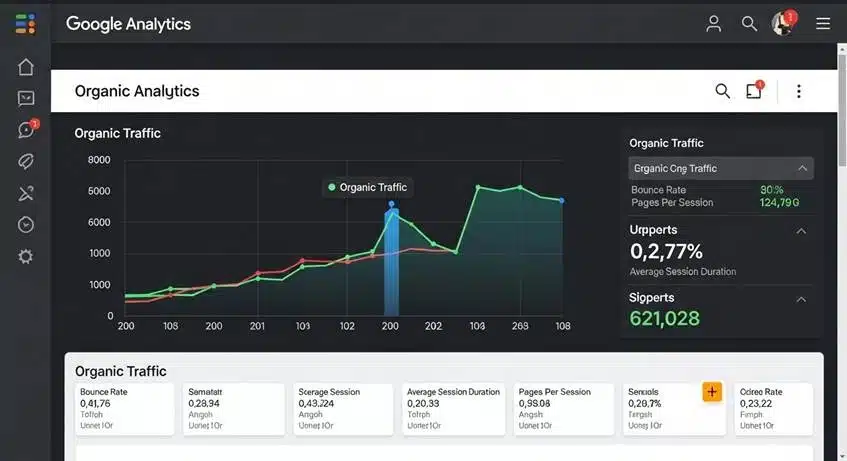
When it comes to understanding your website visitors, Google Analytics (GA) is your best friend, and it’s completely free! It’s the most common way to track and collect data from your website, giving you a wealth of information.
Here’s what GA helps you keep an eye on:
- Organic Traffic: Shows you how many visitors are coming to your site directly from search engines, indicating how well your SEO efforts are paying off.
- User Behavior: Dive into how long people stay on your pages (average session duration), which pages they visit most, and if they’re leaving quickly (bounce rate).
- Audience Demographics: Learn about where your visitors are located, what devices they’re using, and even some of their interests.
- Conversion Tracking: Set up goals in GA to track when visitors complete desired actions, like signing up for your newsletter, filling out a contact form, or making a purchase.
Google Search Console: Unlocking Search Performance
While Google Analytics tells you what happens on your site, Google Search Console (GSC) is all about how Google sees and interacts with your website.
Here’s why GSC is a must-have:
- Search Performance: See exactly which keywords your website is ranking for, how many impressions, and clicks it’s getting. This is invaluable for refining your keyword strategy.
- Index Coverage: GSC tells you if Google can successfully crawl and index your pages. If there are errors, it’ll flag them for you to fix.
- Core Web Vitals: Get insights into your website’s speed and user experience metrics, which are crucial ranking factors.
GSC is like Google’s direct communication channel with you. Pairing it with GA gives you a much richer data picture.
Beyond Google: Exploring Other Insights
While Google’s free tools are incredibly powerful, other platforms can offer even more data.
- Bing Webmaster Tools: Don’t forget the other search engines! Bing Webmaster Tools is a free service from Microsoft that offers a suite of features including keyword research, backlink analysis, and site scanning for technical SEO issues. It provides valuable data on your site’s performance in Bing search results.
- Ahrefs & Semrush: Beyond their research functions, these platforms offer features to track your site’s health and ranking progress over time. Ahrefs Webmaster Tools, for example, provides free access to site health data, backlinks, and organic keyword rankings for your own verified websites.
- Hotjar or Crazy Egg: For more visual user behavior analytics, tools like these offer heatmaps and session recordings, letting you literally see how users click, scroll, and navigate your pages.
Remember, the goal is to turn data into actionable insights. Regularly monitoring these analytics will help you understand what’s working, what’s not, and how to continuously tweak your website ranking strategies to keep that organic traffic flowing.
The Solopreneur’s SEO Toolbox: Essential Categories
To truly master SEO for Solopreneurs, you need a solid grasp of the different types of tools out there. These tools generally fall into a few key categories, each designed to tackle a specific aspect of your website ranking strategies:
- Keyword Research Tools: Your starting point for discovering the phrases your target audience uses. Tools like Google Keyword Planner, Ubersuggest, Ahrefs, and SEMrush are fantastic for this.
- On-Page SEO Optimization Tools: These help you sprinkle keywords naturally into your content and optimize meta descriptions, title tags, and headings. For WordPress users, plugins like Yoast SEO or RankMath are invaluable.
- Technical SEO Checkers: These tools ensure your website’s backend is healthy and easily crawlable by search engines. Google Search Console is a free, essential tool for monitoring site speed, mobile-friendliness, and identifying broken links.
- Content Marketing & Optimization Platforms: Beyond just keywords, these tools help you create high-quality, relevant content. Frase and Surfer SEO are great examples that integrate keyword research and content optimization.
- Local SEO Tools: If your business serves a specific geographic area, a tool like Google Business Profile is non-negotiable for managing your presence in local search and on Google Maps.
Making Your Tools Play Nice: Strategies for Integration
The real magic happens when your chosen small business SEO tools aren’t just standalone apps but part of a cohesive workflow.
Imagine using a keyword research tool to identify target phrases, then directly plugging those into a content optimization tool that helps you write an SEO-friendly blog post. That’s a huge time-saver!
Many tools are designed to work together. For instance, you might use Ubersuggest to find keywords, then use those keywords to craft an optimized post in WordPress with a plugin like Yoast for on-page checks. Some platforms are even evolving into “all-in-one” solutions, which can be a game-changer for organic traffic generation.
Actionable Solopreneur SEO Tips for Workflow Automation
As a solopreneur, your time is your most valuable asset. Here are some practical tips to make your tools work smarter, not harder:
- Map Your Process: Before you automate, understand your current content and SEO process step-by-step. Where are the bottlenecks?
- Leverage Integrations: Look for tools that offer direct integrations with your website platform (like WordPress), email marketing service, or social media schedulers.
- Create Templates and Checklists: Standardize your on-page SEO techniques. Use templates for content briefs, meta descriptions, and image alt text.
- Set Up Alerts: Use tools like Google Search Console to monitor for critical issues like broken links or indexing problems. This allows you to fix issues before they significantly impact your rankings.
- Automate Reporting: Connect your Google Analytics and Search Console to dashboards that give you a quick overview of your performance without manual data compilation.
By consciously integrating your SEO tools and automating where possible, you can free up valuable time to focus on what you do best: running your business. A well-oiled SEO machine ensures that your efforts to drive traffic solopreneur style are consistent, efficient, and ultimately, more successful.
Your Path to SEO Success Starts Now
Navigating the world of SEO as a solopreneur might seem like a steep climb, but it’s a summit you can absolutely reach. The journey to higher rankings and sustainable organic traffic isn’t about having a massive budget or a dedicated team; it’s about being strategic, consistent, and empowered with the right knowledge and tools.
Throughout this guide, we’ve demystified the core pillars of a successful SEO strategy—from foundational keyword research and on-page optimization to technical health checks and authority-building backlinks.
You’ve discovered a powerful arsenal of free and affordable tools designed to act as your virtual SEO team, helping you diagnose issues, uncover opportunities, and track your growth every step of the way.
Remember, you don’t need to master everything overnight. The key to successful SEO for solopreneurs lies in consistent, focused effort. Start small. Choose one tool, like Google Search Console, to set up this week. Dedicate 30 minutes to exploring keyword ideas with Google Keyword Planner. Write one blog post optimized with Rank Math or Yoast.
By taking these incremental steps, you’re not just “doing SEO”—you’re building a powerful, cost-effective engine for growth that will attract your ideal customers and drive your business forward. The power to rank higher is in your hands. Now, go claim your spot.
FAQs
What is the most important SEO for solopreneurs?
For solopreneurs, the most important SEO aspect is prioritizing high-quality, valuable content that genuinely answers user questions and provides solutions. This content, optimized with strategic keyword research, helps attract the right audience and establishes your authority in your niche. Additionally, optimizing your Google Business Profile is crucial for local visibility and connecting with potential customers in your area.
Can a solopreneur do SEO effectively by themselves?
Yes, a solopreneur can absolutely do SEO effectively by themselves, particularly in the early stages of their business. Focusing on fundamental strategies like thorough keyword research, creating high-quality, valuable content, optimizing on-page elements (titles, descriptions, headings), and utilizing free tools like Google Analytics and Search Console can significantly improve visibility and drive organic traffic.
What are the best free SEO tools for solopreneurs?
For solopreneurs, the best free SEO tools include Google Search Console to monitor site performance and identify issues, and Google Analytics to track website traffic and user behavior. Google Keyword Planner helps with keyword research, while Google Business Profile is crucial for local SEO. Additionally, tools like Ubersuggest and Ahrefs Free Tools offer valuable insights for keyword ideas and competitive analysis
How do solopreneurs find keywords for their business?
Solopreneurs can find keywords by brainstorming terms related to their business and customer queries. They should then leverage free tools like Google Keyword Planner, Google Autocomplete, and the “People Also Ask” feature on Google to discover relevant search terms and phrases.